Music Marketing•July 29, 2026
How To Pitch Music To Curators Without Sounding Like Everyone Else
Publish via: Admin Panel to Blog to New Post
Slug: `pitch-music-without-sounding-like-everyone`
Tags: music pitching, submit music to curators, music marketing, music promotion
Author: Soundyaad Team
Publish date: 2026-05-11
Estimated read time: 5 minutes
Canonical URL: https://https://soundyaad.com/blog/pitch-music-without-sounding-like-everyone
Category: Guides
SEO Title: How To Pitch Music Without Sounding Like Every Other Artist
SEO Description: Learn how independent artists can pitch music with stronger context, better targeting, and a cleaner curator workflow.
Excerpt: A pitch is not only a link. It is context, fit, timing, and respect for the person listening.
Featured image description: A clean curator dashboard mockup with a track submission card on the left showing artwork, artist name, genre tag, and a short context note. Background is a soft white workspace. Brand red accent on the status pill.
Featured image alt text: Soundyaad pitching dashboard with a music submission card showing track title, genre, artist context, and status.
Most music pitches sound the same.
Please check my song.
New single out now.
Let me know what you think.
Here is the link.
The problem is not that artists are lazy. Most artists are doing their best with the tools they have. The problem is that a random message does not give curators enough context to care.
Curators, bloggers, playlist owners, and tastemakers get a lot of submissions. If your pitch looks like every other message, it is easy to ignore.
A better pitch gives the listener enough information to understand the song, the fit, and the next step.
That is where Soundyaad Pitching can help.
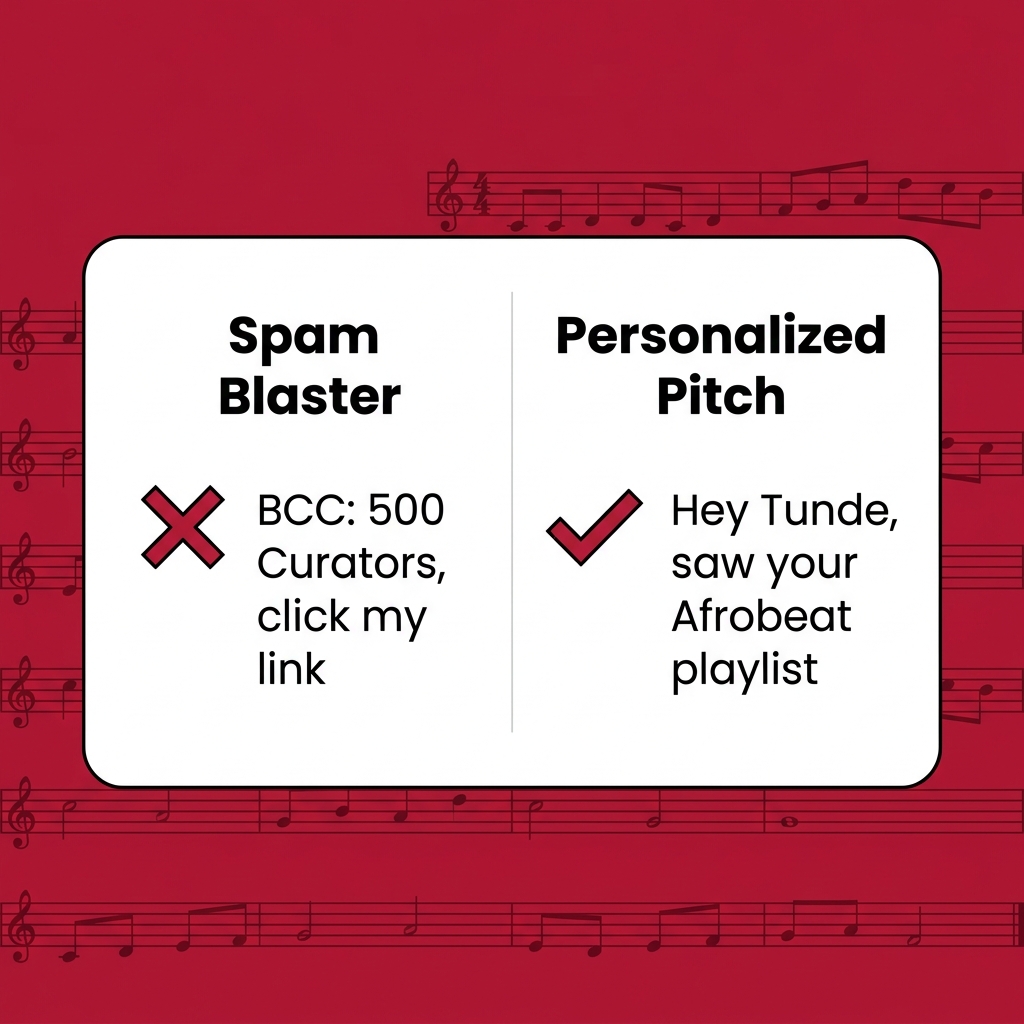
Why most music pitches get ignored
A pitch usually gets ignored for one of five reasons.
1. The song does not fit the curator
2. The message gives no context
3. The link looks random or unsafe
4. The artist asks for too much too quickly
5. There is no clear reason to listen now
A curator might be open to new music, but that does not mean every song belongs in front of them.
If a curator focuses on gospel and you send drill, the pitch is not a fit.
If a curator covers emerging Ghanaian artists and you send a generic message with no story, the pitch may not stand out.
If you send only a raw link, the curator has to do extra work to understand who you are, what the song is, and why it matters.
A strong pitch reduces that work.
Give curators the context they need
Context does not mean a long biography.
It means the right details.
A curator usually needs to know:
1. Artist name
2. Song title
3. Genre or sound
4. Release status
5. Why the song fits their audience
6. One short story or angle behind the track
7. A clean way to listen
That is enough.
Do not write a full press release in a DM. Do not send five paragraphs when three sentences will do.
The goal is clarity.
Example:
I am sharing a new Afrobeats single built around a live guitar groove and a hook about long distance love. I think it fits your audience because you cover melodic African pop and emerging artists. Here is the Soundyaad pitch link with the track and details.
That is much stronger than Please check my song.
Choose curators by fit, not follower count
Many artists chase the biggest curator they can find.
That is not always the best move.
A smaller curator with the right audience can be more useful than a larger curator with the wrong audience.
Before pitching, ask:
1. Does this curator cover my genre?
2. Do they support artists at my stage?
3. Do they post music similar to mine?
4. Is their audience likely to care about this song?
5. Have they shared submission preferences?
Pitching is not only about reach. It is about fit.
Soundyaad can support this by giving artists a cleaner way to send tracks to curators instead of dropping random links across different inboxes.
Make the listening experience easy
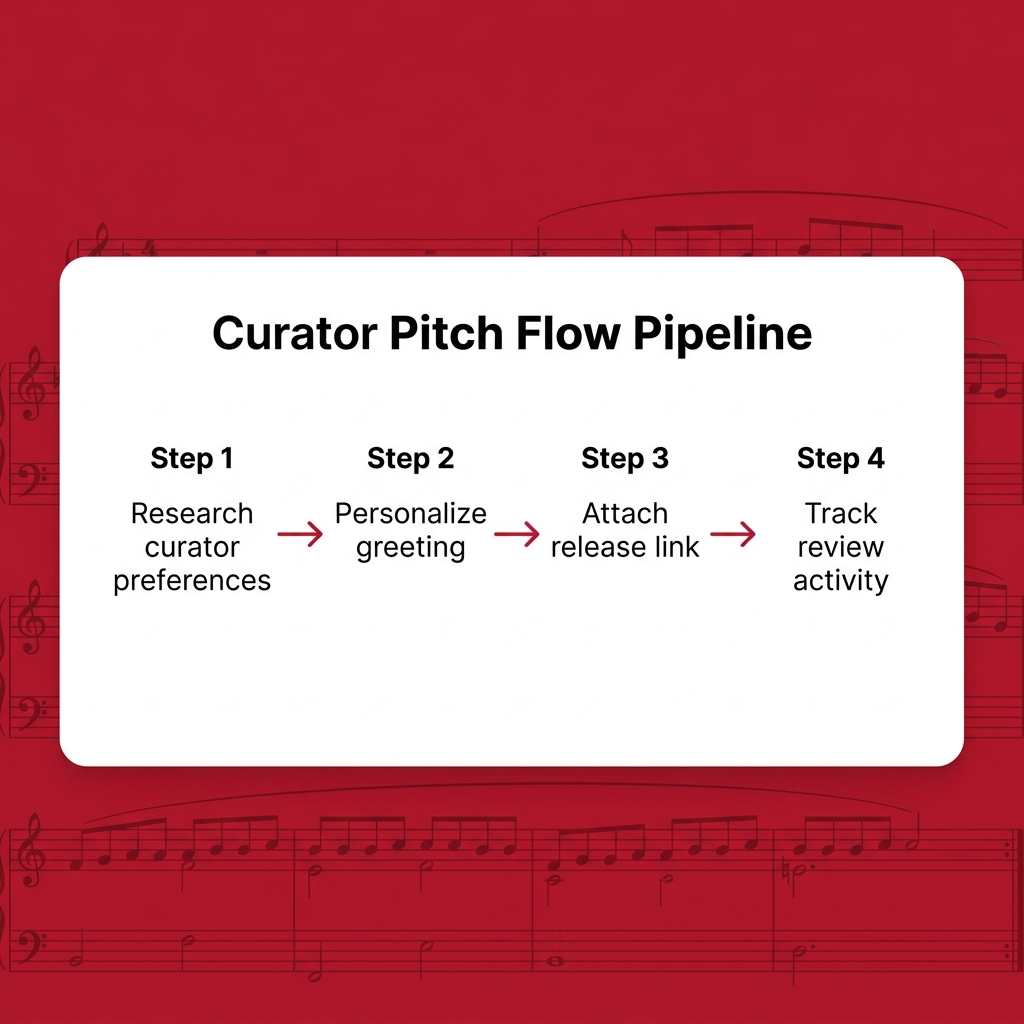
A curator should not have to fight the link.
If your song is already released, the listening path should be clear.
If your song is unreleased, the private listening path should feel safe and simple.
This matters because friction kills attention.
If the link is confusing, the file is hard to open, or the message lacks context, the curator may move on.
A better workflow gives the curator the track, the context, and the status in one place.
That is the point of building pitching into Soundyaad. The artist can present the track more professionally, and the curator gets a cleaner review experience.
Follow up without pressure
Following up is normal.
Pushing is not.
A good follow up is short, respectful, and easy to answer.
Example:
Just checking if you had a chance to listen. If it is not a fit, no worries. I appreciate your time.
That kind of message respects the curator.
Avoid guilt. Avoid repeated messages. Avoid acting like someone owes you coverage.
The goal is to build relationships, not force one placement.
What to include in a stronger pitch
Here is a practical pitch checklist.
1. One sentence about the song
2. One sentence about why it fits the curator
3. A clean listening link
4. Genre or mood context
5. Release status
6. A respectful close
You can also include one useful proof point if it is real.
For example, early fan response, a notable collaborator, a live performance clip, or a clear story behind the song.
Do not invent numbers. Do not overstate. Curators can feel when a pitch is exaggerated.
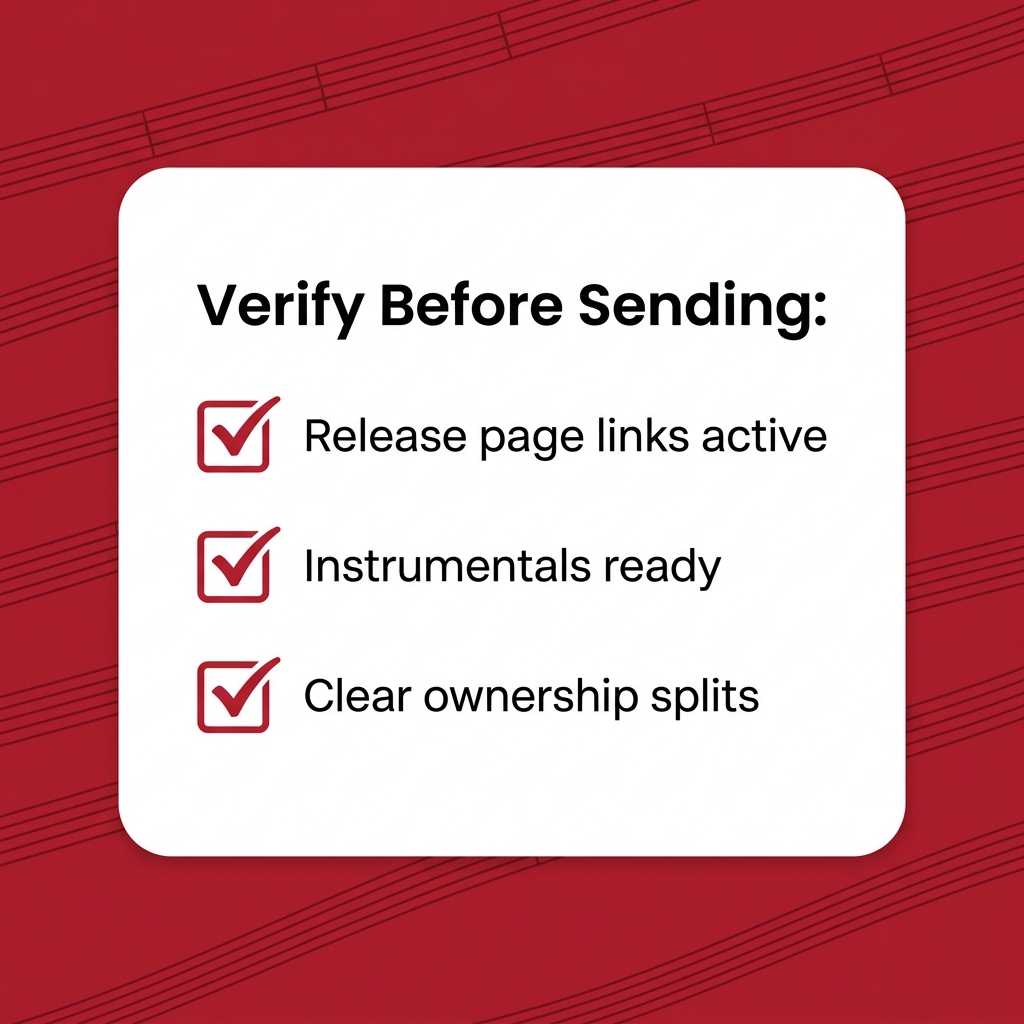
How Soundyaad fits into the pitching workflow
Soundyaad is not a magic button that makes every curator say yes. No tool can promise that.
What Soundyaad does is build a fair, transparent pitching ecosystem for independent artists:
1.
Verified Curator Marketplace: Browse playlist curators with real, verified reach stats, ensuring your credits are only spent on curators who actually have active listeners.
2.
The Credits Refund Guarantee: Every pitch costs a credit. If a curator does not review your song or respond within their set deadline, the credit is automatically refunded to your account.
3.
Guaranteed Written Feedback: Curators are required to provide written constructive feedback on every pitch they review, meaning you never get left in the dark.
This structure moves pitching away from chaotic DMs and unread emails into a professional, accountable system.
Pitch like you respect the listener
A good pitch is not about begging for attention.
It is about making it easy for the right person to understand why your song might matter to their audience.
That means context. Fit. Clarity. Timing. Respect.
If you do those things consistently, you will already sound different from most artists in the inbox.
Related reading
1.
A Better Curator Pitch Checklist For Artists
2.
Why Curator Fit Beats Mass Pitching
3.
How Artists Can Use Soundyaad Vault Before A Release
Get started
Open the Soundyaad pitching dashboardProtect your unreleased tracks: Share watermarked previews with curators using SoundYaad Vault.


