

August 5, 2026
Managing one artist is already work.
Managing several artists is a different challenge.
Every artist has releases, pages, artwork, links, fans, private files, campaign updates, and performance questions. If each artist uses a different tool, the manager or label team ends up managing chaos instead of growth.
Small labels rarely have the same resources as major teams.
They need structure that is practical, affordable, and easy to use.
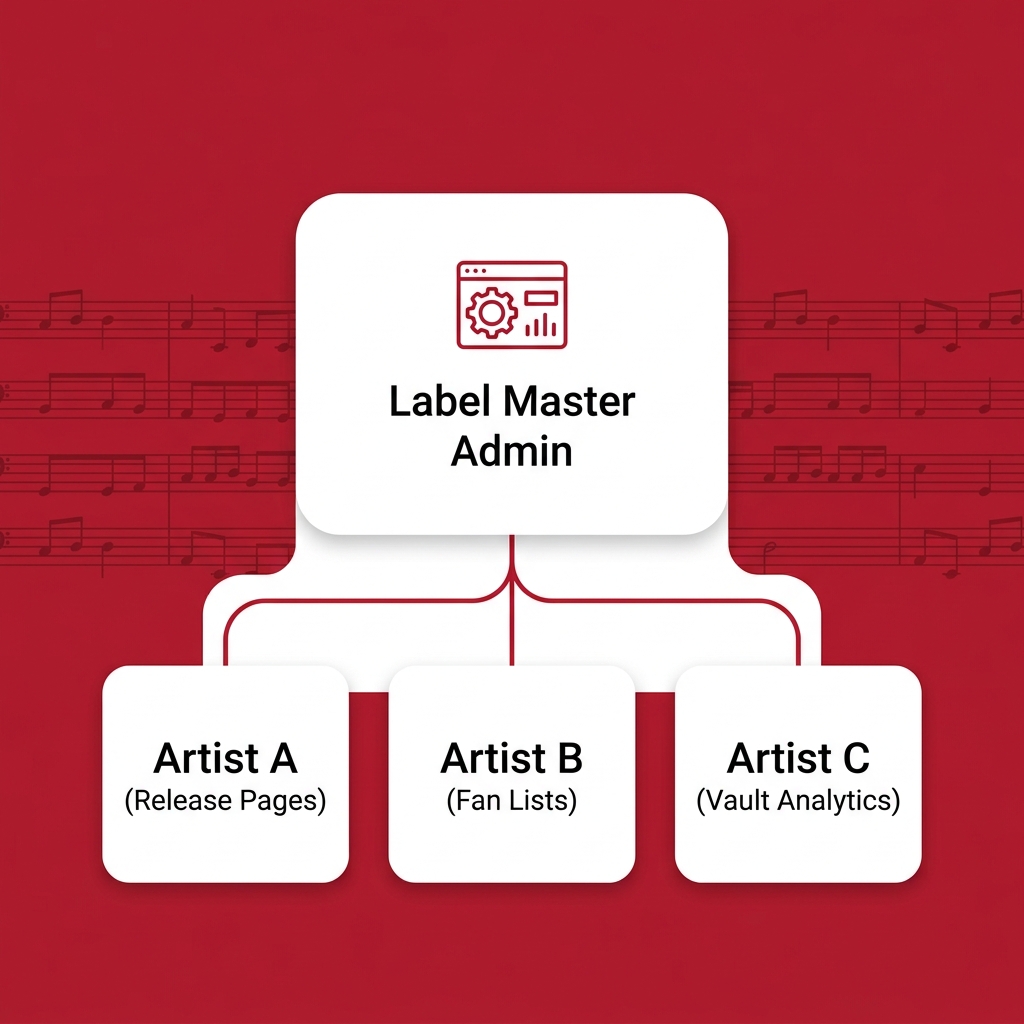
That is why Soundyaad includes label focused workflows. The goal is to help small teams organize artists, releases, Fanbase growth, pages, and reporting without needing a large marketing department.
A scattered system usually looks like this.
One artist has release links in one tool.
Another artist keeps fan contacts in a spreadsheet.
A third artist stores private tracks in a folder.
Reports are shared as screenshots.
The team has no single view of what is happening.
This creates slow work.
It also creates mistakes.
A release link gets updated in one place but not another. A fan list is exported and forgotten. A campaign result cannot be found when the next meeting starts. A manager has to ask each artist for updates instead of seeing the work clearly.
That is not sustainable.
A good label workflow should not flatten every artist into one generic account. Each artist needs their own identity, their own releases, their own Fanbase database, and their own campaign history.
Soundyaad’s Label Plan supports this structure by providing:
While each artist needs their own space, the team needs clarity across the roster. A manager should be able to see which releases are live, which release pages are capturing fans, and which fanbases are growing.
With Soundyaad's Label Dashboard, you get an aggregated view of roster-wide performance:
For small labels, Fanbase growth is a serious asset.
The label may help an artist promote a release, but the long term value is in the audience that remains after the campaign.
If an artist captures fan contacts through release pages and artist pages, the team should be able to understand that growth.
How many fans joined?
Which release helped capture them?
Which country or city signals are emerging?
Which fans should receive the next campaign?
This is page and Fanbase activity. It is not streaming data.
Soundyaad should be used to understand the activity around Soundyaad pages and the Fanbase that grows from those touchpoints.
That information helps the label plan better campaigns.
Screenshots are useful for quick sharing, but they are not a reporting system.
If a manager has to search through messages to find last month results, the workflow is too fragile.
A small label needs a cleaner way to review releases, page activity, fan capture, and campaign progress.
The team should be able to see the important signals without rebuilding the report from scratch every time.
This is especially important when several artists are active at once.
Reports help teams decide where to spend time, what to repeat, and what to improve.
A release should not be separated from the fan relationship that follows it.
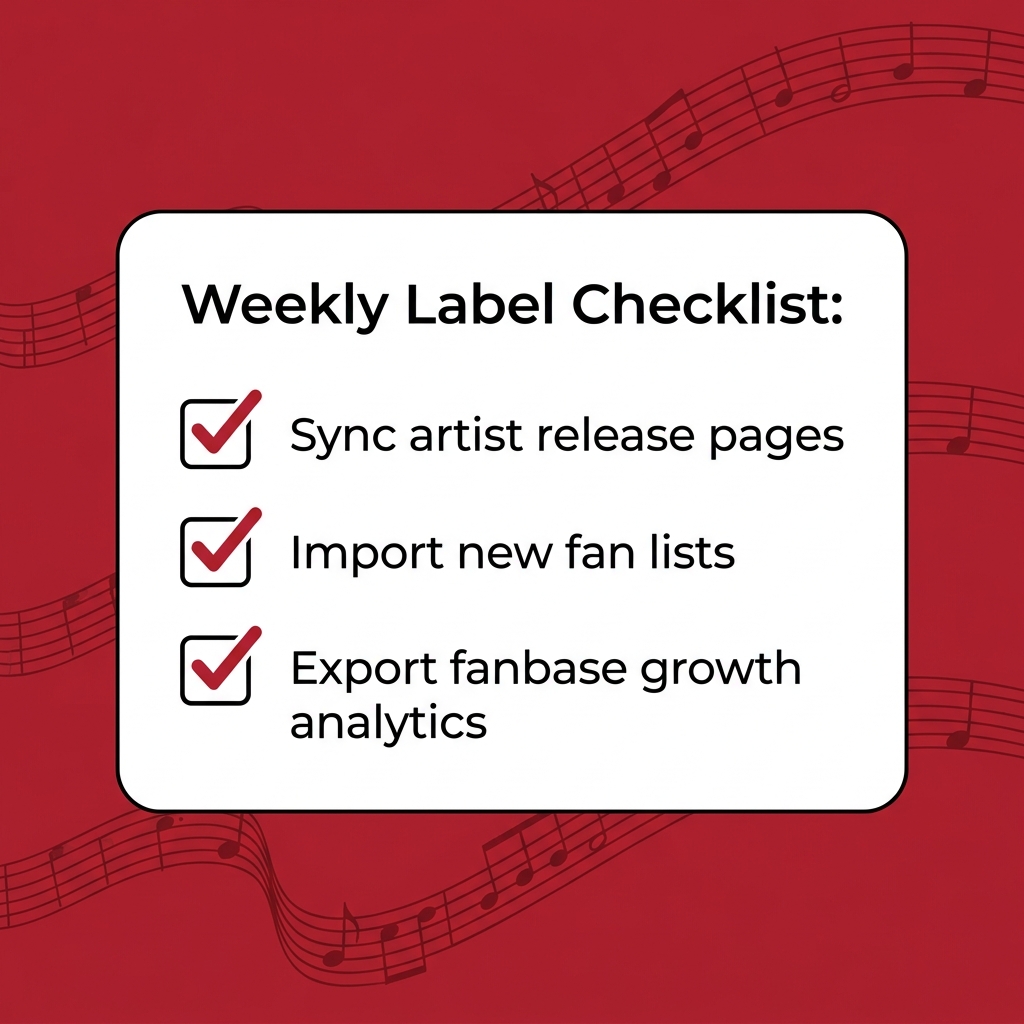
For each artist, the workflow should look like this.
If every artist follows a similar structure, the label can compare progress more easily.
The team can still respect each artist identity while using a shared operating rhythm.
Small labels do not need to control every creative decision.
But they should standardize the parts that create clarity.
This keeps the team organized without making every artist feel the same.
Artists need space to create.
Managers and labels need structure to support that creativity.
When the system is messy, everyone spends more time chasing links, asking for updates, and rebuilding reports.
When the system is clean, the team can focus on better campaigns, better fan relationships, and better release planning.
That is the goal of Soundyaad for labels.
Not heavy software.
Not complexity for its own sake.
A practical workspace for small teams trying to help artists grow.

